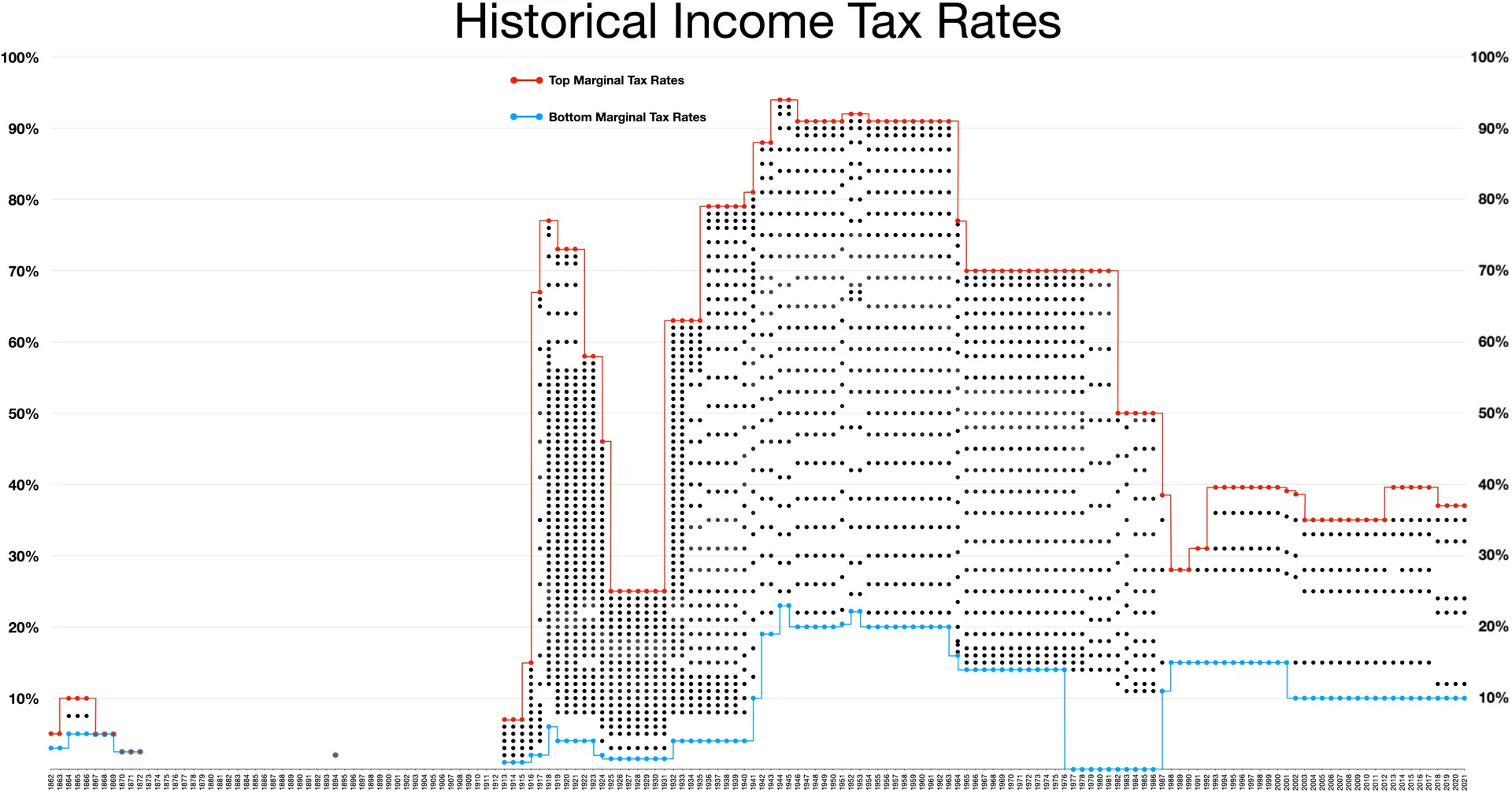
Photo by Wikideas1, CC0, via Wikimedia Commons
Federal tax brackets for 2026 define the percentage of income the government collects from individuals and businesses, serving as the foundation for every tax return filed in that year. Because the Internal Revenue Service (IRS) adjusts these rates for inflation annually, understanding the 2026 federal tax brackets is critical for anyone planning their finances, estimating quarterly payments, or managing their withholdings to avoid surprises at filing time. The system operates on a progressive scale, meaning lower portions of your income are taxed at lower rates, while higher portions face higher percentages, ensuring that wealthier individuals contribute a larger share of their total earnings relative to their income level.
How the Progressive Tax System Works in 2026
Many taxpayers mistakenly believe that if their income crosses a threshold, their entire income jumps to the higher tax rate. This is a common myth. In reality, the progressive tax structure applies different rates to “chunks” of your income, similar to filling a series of buckets. If you earn enough to enter the 24% bracket, only the money above the previous bracket’s limit is taxed at 24%. The money in the lower buckets remains taxed at the lower rates.
For the 2026 tax year, the IRS will likely publish specific dollar amounts for each bracket based on the Consumer Price Index (CPI) inflation data released in the prior fall. While exact dollar figures are adjusted annually, the percentage rates are typically fixed by legislation unless Congress passes a new tax bill. Historically, the individual income tax brackets have remained relatively stable in percentage terms, with only minor tweaks to the thresholds. Readers should expect the seven standard brackets to persist, ranging from 10% to 37%.
To illustrate, if the 10% bracket cap remains similar to recent years, the first roughly $11,000 to $12,000 of taxable income for a single filer would be taxed at 10%. The next chunk up to around $45,000 would be taxed at 12%. This structure continues up to the top marginal rate of 37%, which applies to the highest earners. It is vital to distinguish between taxable income and gross income. Taxable income is what remains after deductions and adjustments, not the total amount you earned.
Key Factors That Alter Your Effective Tax Rate
Knowing the marginal tax bracket is only one part of the puzzle. Your effective tax rate is the actual percentage of your total taxable income paid in taxes. This is often significantly lower than your marginal rate because of the progressive system. Several factors influence this effective rate and your overall liability for 2026.
- Filing Status: Your marital status affects your brackets. Married couples filing jointly usually have wider brackets than single filers, while married individuals filing separately face compressed brackets. Head of household and qualifying widow(er) statuses also modify the threshold amounts.
- Standard vs. Itemized Deductions: In 2026, the standard deduction will likely increase due to inflation. If your itemized deductions (such as mortgage interest, state and local taxes, and charitable contributions) do not exceed the standard deduction, you should take the standard. This reduces your taxable income, potentially lowering you into a lower bracket.
- Pre-Tax Contributions: Money placed into employer-sponsored retirement plans like 401(k)s or 403(b)s, as well as Health Savings Accounts (HSAs), is removed from your taxable income before tax brackets are applied. Increasing these contributions can lower your marginal rate.
- Capital Gains and Dividends: Long-term capital gains and qualified dividends are taxed at preferential rates (0%, 15%, or 20%) separate from ordinary income brackets. However, they can push you into higher ordinary income brackets for other types of income.
The Impact of Inflation Adjustments on 2026 Brackets
The IRS uses inflation data to adjust tax brackets to ensure that individuals are not pushed into higher tax brackets simply because their nominal wages increased due to rising prices. This process, known as bracket creep prevention, is automatic for most years. For the 2026 tax year, these adjustments will be announced in the fall of 2025.
If inflation remains high, the dollar thresholds for each bracket will increase, allowing more income to fall into the lower tax rates. Conversely, if inflation is low, the increases in brackets may be minimal. This means that even if your salary does not grow, your tax liability might decrease slightly if the brackets expand. Conversely, if your salary grows faster than the inflation adjustment, you may see your effective tax rate rise.
It is important to note that while the IRS adjusts brackets annually, Congress can change the rates themselves through legislation. Any pending tax reform bills or expirations of previous tax cuts could alter the 2026 rates. Therefore, while the 10-37% structure is the most likely scenario, taxpayers should stay informed about legislative changes leading up to the 2026 filing season.
Strategies to Optimize Your 2026 Tax Liability
Proactive planning can help you navigate the federal tax brackets for 2026 more effectively. Here are practical steps to consider:
- Review Your Withholdings: Use the IRS Tax Withholding Estimator or your employer’s tax system to ensure you are withholding the correct amount. If you expect your income to change significantly in 2026, adjust your W-4 form early in the year.
- Maximize Retirement Contributions: Contributing the maximum allowable amount to your 401(k) or IRA can lower your taxable income, potentially keeping you in a lower marginal bracket.
- Bundle Charitable Donations: If you itemize, consider accelerating charitable donations into 2026 or bunching them into even years to maximize the deduction impact, especially if you are close to the threshold for itemizing over the standard deduction.
- Understand State Tax Implications: While this article focuses on federal brackets, state taxes can also be progressive. Ensure your total tax burden is optimized across both federal and state levels.
Frequently Asked Questions
What is the highest federal tax bracket for 2026?
The top marginal federal income tax rate is currently 37%. Unless Congress passes legislation changing the rate structure, this top rate is expected to remain in place for the 2026 tax year, applying to the highest earners after deductions.
Do tax brackets change every year?
Yes, the dollar thresholds for tax brackets are adjusted annually for inflation. While the percentage rates (like 10%, 12%, 22%) often stay the same, the income ranges that trigger those rates shift slightly to account for changes in the cost of living.
How do I calculate my 2026 tax bracket?
To determine your bracket, subtract your deductions and exemptions from your total income to find your taxable income. Then, compare that amount to the 2026 IRS bracket thresholds for your filing status. The rate that applies to your highest dollar of income is your marginal tax bracket.
Is it better to be in a higher tax bracket?
Not necessarily. A higher tax bracket means a higher marginal rate on additional income, but it also often correlates with higher overall income. The goal is not to avoid higher brackets but to maximize after-tax income. Sometimes earning more is beneficial even if the marginal rate is higher, provided the after-tax gain is positive.
How do self-employed individuals handle federal tax brackets in 2026?
Self-employed individuals report their net business profits on Schedule C. They must also pay Self-Employment Tax to cover Social Security and Medicare, in addition to federal income tax based on the standard brackets. They can deduct half of their self-employment tax as an adjustment to income before applying the federal income tax brackets.
Conclusion
Understanding the federal tax brackets for 2026 is essential for effective financial planning. By grasping the progressive nature of the tax system, anticipating annual inflation adjustments, and leveraging deductions and retirement contributions, you can minimize your tax liability and maximize your after-tax income. As the specific dollar thresholds for 2026 are released, revisit your withholdings and financial strategy to ensure you are positioned for success in the upcoming tax year. Staying informed and proactive is the best way to navigate the complexities of the U.S. tax system.