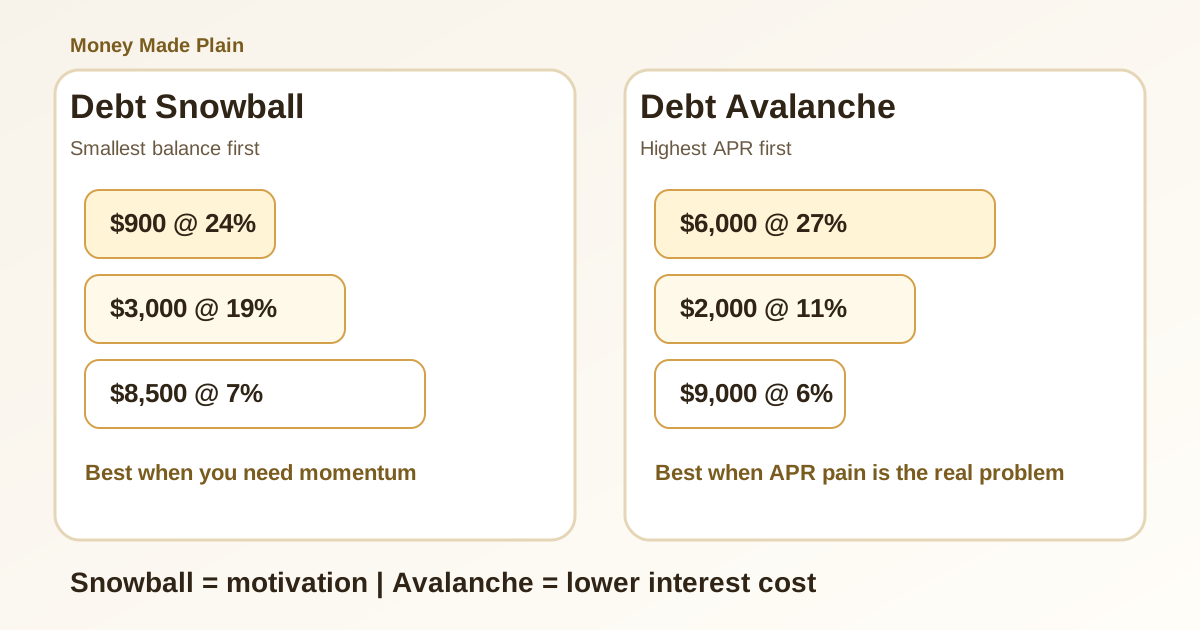
If you are comparing debt snowball vs. debt avalanche, the headline difference is simple: the snowball method pays off your smallest balance first, while the avalanche method attacks your highest interest rate first.
Both can work. Both require the same core rule: make the minimum payment on every debt, then throw every extra dollar at one target at a time.
The real question is not which method sounds smarter on paper. It is which one you will actually stick with long enough to get out of debt.
The short version
- Debt snowball: pay off the smallest balance first, regardless of APR
- Debt avalanche: pay off the highest APR first, regardless of balance
- Snowball usually wins on motivation
- Avalanche usually wins on total interest saved
- The best method is the one you can follow for the next 12 to 36 months
If your biggest problem is staying motivated, snowball is usually the better pick. If your biggest problem is brutal interest rates, avalanche usually makes more sense.
How the debt snowball method works
With the debt snowball method, you list your debts from smallest balance to largest balance.
Then you:
- make the minimum payment on every debt
- put all extra money toward the smallest balance
- once that debt is gone, roll that payment into the next-smallest debt
- repeat until everything is gone
Example:
| Debt | Balance | APR | Minimum |
|---|---|---|---|
| Credit card A | $900 | 24% | $35 |
| Credit card B | $3,000 | 19% | $90 |
| Car loan | $8,500 | 7% | $240 |
| Student loan | $12,000 | 5% | $130 |
If you have an extra $300 per month after minimums, the snowball method sends that $300 to credit card A first because it has the smallest balance.
Why people like it: you get an early win. One account disappears. Your monthly obligations get simpler. That progress can matter a lot when debt has been hanging over you for years.
This is the same reason people often do better when they combine a payoff plan with a simple spending system like how to make a budget or the zero-dollar budget method. Clarity helps people stay in the fight.
How the debt avalanche method works
With the debt avalanche method, you list your debts from highest APR to lowest APR.
Then you:
- make the minimum payment on every debt
- put all extra money toward the highest-interest debt
- once that debt is gone, roll that payment into the next-highest APR debt
- repeat until everything is gone
Using the same debts above, the avalanche method would still hit credit card A first because it has the highest APR. But if the balances were different, avalanche and snowball would often pick different targets.
Why people like it: it is the most efficient method mathematically. You reduce the debt that is costing you the most first, which usually means paying less interest overall.
If you are dealing mostly with expensive revolving debt, this approach pairs naturally with a more detailed plan like how to pay off debt fast or our guide to the fastest way to pay off credit card debt.
Debt snowball vs. debt avalanche: the real tradeoff
This is where people overcomplicate it.
The tradeoff is not “good method” versus “bad method.” It is:
- snowball = faster emotional wins
- avalanche = lower interest cost
Fresh 2025–2026 personal finance coverage from Fidelity, CNBC, and Discover all lands in basically the same place: avalanche usually saves more money, but snowball can be easier to stick with because you see progress sooner.
That distinction matters because the perfect plan that you abandon in four months is worse than the slightly less efficient plan you actually finish.
Which one saves more money?
Usually, debt avalanche.
That is because high-interest debt grows faster. Every extra month you carry a 24% APR credit card balance costs you more than an extra month on a 6% car loan.
If your debts have very different APRs, avalanche can save a meaningful amount of money.
For example, if you have:
- a $6,000 credit card at 27%
- a $2,000 personal loan at 11%
- a $9,000 car loan at 6%
Snowball would push the $2,000 loan first.
Avalanche would hit the 27% credit card first.
In that kind of setup, avalanche is usually the smarter money move because the interest gap is so wide.
Which one is easier to stick with?
Usually, debt snowball.
If you have ever started a debt plan, made progress for two months, then fell off, this matters more than people want to admit.
Small wins change behavior. Paying off one account quickly can:
- reduce stress
- simplify your monthly bills
- make the process feel real instead of endless
- prove to you that the plan is working
That is why snowball is often the better choice for people who feel overwhelmed, discouraged, or financially disorganized.
If that sounds like you, there is no prize for choosing the mathematically perfect method and then quitting. Use the method that keeps you moving.
When snowball is probably the better choice
Debt snowball is usually better if:
- you need quick wins to stay motivated
- you have several small balances you can knock out fast
- your interest rates are fairly close together
- you are trying to simplify your finances as fast as possible
- you have quit debt payoff plans before
It can also make sense if your smallest debt has a payment that would free up breathing room once eliminated. Getting rid of one required monthly payment can lower the sense of chaos.
When avalanche is probably the better choice
Debt avalanche is usually better if:
- you have one or two brutal high-interest debts
- your APRs vary a lot
- you are motivated by numbers, not momentum
- you want the cheapest path out of debt
- you can stay consistent even if the first payoff takes a while
This is especially true if you are carrying expensive credit card debt. High APR cards can wreck progress fast, which is why improving your credit score and lowering your borrowing costs over time matters too.
A simple hybrid approach if you are stuck
You do not have to be religious about either method.
A good hybrid rule is:
- knock out one very small nuisance balance first if it will take less than a month or two
- then switch to avalanche for the rest
That gives you an early psychological win without ignoring the expensive debt forever.
Another hybrid version: if two balances are close in size, pay off the one with the higher APR first.
The point is not to impress finance nerds on the internet. The point is to get out of debt.
Mistakes that make both methods fail
No payoff strategy works if these problems stay in place:
1. Only paying minimums
Minimums keep you alive, not free. You need extra cash flow for either method to matter.
2. Adding new debt while paying off old debt
If the balances keep growing, you are running on a treadmill.
3. No budget at all
If you do not know where the extra payment money is coming from, the plan will fall apart the first hard month.
4. No starter emergency fund
Without some cash buffer, every car repair or surprise bill goes right back on a credit card. Even a small cushion helps. We cover the sizing logic in how much your emergency fund should be.
So, debt snowball vs. debt avalanche: which is better?
Here is the honest answer:
- Debt avalanche is better on math.
- Debt snowball is better for motivation.
- The better method for you is the one you will still be using six months from now.
If you are disciplined, numbers-driven, and staring at ugly APRs, pick avalanche.
If you are overwhelmed, need momentum, or have a history of stopping and restarting, pick snowball.
Either way, the biggest win is not choosing the perfect method. It is choosing a method and actually starting.
Bottom line
If you are deciding between debt snowball vs. debt avalanche, do not get stuck in analysis mode.
List your debts. Set your minimums to autopay. Pick one target. Send every extra dollar there this month.
A slightly imperfect plan executed consistently beats a perfect plan you never start.
Related Reads
- How to Pay Off Debt Fast — the practical system behind both payoff methods
- The Fastest Way to Pay Off Credit Card Debt — what to do when high APR cards are the main problem
- How Much Should Your Emergency Fund Be? — the cash buffer that keeps new debt from replacing old debt