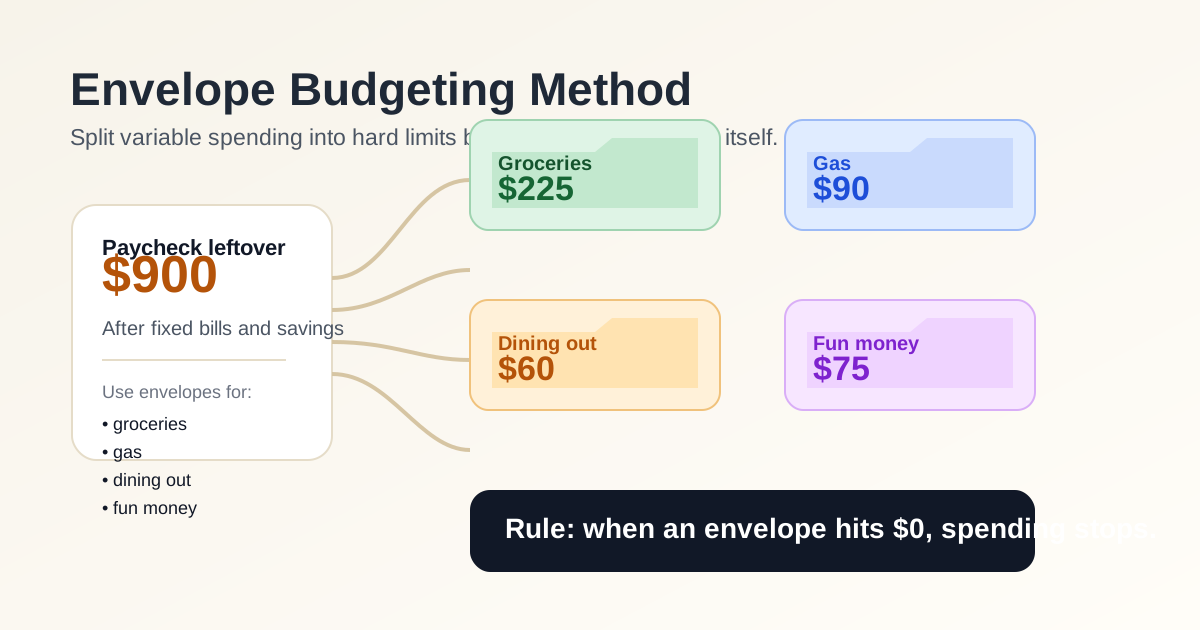
The envelope budgeting method works because it makes overspending harder in the moment, not just obvious afterward.
That is the whole appeal.
Instead of swiping your card and hoping you stayed “pretty close” to budget, you decide ahead of time how much each category gets. When that envelope is empty, you stop.
If cash stuffing videos pulled you toward this idea, good instinct — but the useful version is usually less aesthetic and more practical. The envelope system can work really well for variable spending, especially if you keep blowing past categories like groceries, dining out, or personal spending.
If you do not have a basic plan yet, start with how to make a budget that you will actually stick to. If you already have a budget and need stronger guardrails, the envelope method is one of the simplest upgrades.
What is the envelope budgeting method?
The envelope budgeting method is a system where you assign a fixed amount of money to specific spending categories before you spend it.
Traditionally, that meant literal envelopes with cash inside.
You might label them:
- groceries
- gas
- dining out
- fun money
- kids’ activities
- household extras
When you spend from a category, the money comes out of that envelope. When the envelope is empty, that category is done until the next pay period or month.
That is why it works for a lot of people: it turns vague intentions into a hard stop.
Why envelope budgeting works better than “just tracking”
A lot of budgets fail because they are rearview-mirror systems.
You spend first. Then later you check the app, feel bad, and promise to do better next week.
The envelope system flips that around.
It forces you to choose your limit before the spending happens. That matters if you tend to drift, overspend a little in ten different places, or tell yourself you will “make it up later.”
If you mostly need awareness, something simpler like the 50/30/20 budget rule may be enough. But if you need stronger behavior control, envelope budgeting usually works better than loose category tracking.
How the envelope budgeting method works
The setup is simple.
1. Start with a few variable spending categories
Do not build 18 envelopes on day one.
Start with the categories where overspending happens most often, like:
- groceries
- dining out
- gas
- entertainment
- personal spending
- kids’ miscellaneous spending
Your fixed bills usually do not need envelopes. Rent, insurance, phone, and subscriptions can stay in your bank account and be paid normally.
2. Pick a spending limit for each category
Use your actual last 1 to 2 months of spending, not fantasy numbers.
If you have been spending $700 a month on groceries, setting the envelope at $300 will just make you quit by the second week. Start realistic, then tighten slowly.
If you need help finding room, how to cut monthly expenses without feeling deprived is the better first move.
3. Fund the envelopes when you get paid
You can do this monthly or by paycheck.
If you get paid twice a month, many people find it easier to split the envelope amounts across both paychecks. That way you are not trying to stretch one early cash withdrawal across four weeks.
4. Spend only from the right envelope
If dining out has $120 and you already spent $95, then the next restaurant decision gets very clear very fast.
That is the point.
The envelope system is supposed to create friction. A little annoyance is often what stops the mindless spending loop.
5. When an envelope is empty, stop or move money intentionally
This is the rule that makes the system real.
If one envelope runs out, you have two honest options:
- stop spending in that category
- move money from another category on purpose
What you do not do is pretend it does not count.
That is where the method either works or falls apart.
The best categories for envelope budgeting
Envelope budgeting works best for variable spending, not fixed bills.
Good envelope categories:
- groceries
- restaurants and coffee
- gas
- household extras
- clothing
- fun money
- kids’ activities
- beauty/personal care
Bad envelope categories:
- rent or mortgage
- utilities on autopay
- insurance premiums
- debt minimum payments
- retirement contributions
Those are better handled in a broader system like the zero-dollar budget method or a standard monthly cash-flow plan.
Physical envelopes vs. digital envelopes
This is where people overcomplicate it.
You do not need to go full-cash for the method to work.
Physical envelopes
Physical cash envelopes are best if:
- card spending is your real problem
- seeing cash leave your hand changes your behavior
- you want the strongest possible spending boundary
The downside is obvious: cash is clunky. Online purchases, family logistics, and automatic bills do not fit neatly.
Digital envelopes
Digital envelopes are the modern version.
Apps like Goodbudget and YNAB let you create category limits without carrying cash everywhere. If you want a broader breakdown of budgeting tools, see the best budgeting apps: free vs. paid.
For most people in 2026, the smartest version is a hybrid:
- fixed bills stay in checking
- savings stays automated
- envelope categories handle overspending zones
That is usually more sustainable than trying to run your whole financial life in paper envelopes.
Common envelope budgeting mistakes
Using it for every category
You do not need an envelope for your electric bill.
The method is strongest when used on the categories that actually create budget leaks.
Making the starting numbers too aggressive
If your envelope amounts feel like punishment, you will abandon the system.
Start close to reality. Then improve from there.
Forgetting irregular expenses
This is a big one.
Car registration, holiday gifts, school fees, annual subscriptions, and travel are not random. They are predictable irregular expenses.
Do not treat them like emergencies every time they show up.
Set aside money for them separately. The envelope method can still work, but those categories often function better as sinking-fund buckets in savings rather than cash in your wallet.
Stealing from every other envelope without noticing
Moving money is allowed.
Moving money constantly is just overspending with extra steps.
If you keep raiding groceries to fund takeout, that is not a category problem. It is a behavior pattern.
Who the envelope budgeting method is best for
This method is especially good if:
- you keep overspending in a few repeat categories
- card spending feels too invisible
- you like simple rules more than detailed spreadsheets
- you are trying to stop living in reaction mode
- you want tighter day-to-day control than the 50/30/20 budget rule gives you
It is also useful if you are trying to stop the paycheck-to-paycheck cycle. The system will not solve low income by itself, but it can reduce the quiet category creep that keeps you stuck. If that is the bigger issue, read how to stop living paycheck to paycheck too.
Who should probably skip it
Envelope budgeting is probably not the best fit if:
- your spending is already pretty controlled
- you mostly need long-term planning, not daily guardrails
- you hate cash and will never actually maintain envelopes
- your income is highly irregular and you need a full cash-flow system first
In those cases, a simpler planning method or a digital zero-based system may fit better.
A simple envelope budgeting example
Say your twice-monthly paycheck leaves you with $900 after fixed bills and savings are covered.
You might split the next two weeks like this:
| Category | Amount |
|---|---|
| Groceries | $225 |
| Gas | $90 |
| Dining out | $60 |
| Personal spending | $75 |
| Household extras | $50 |
| Kids / misc. | $50 |
| Buffer | $50 |
| Leftover for savings goal or debt | $300 |
That is not the only right setup.
The real goal is to decide in advance what your money is for, then make overspending obvious enough that you catch it early.
My honest take
The envelope budgeting method is not magical. It is just clear.
And clarity is underrated.
If your current budget keeps failing because everything still feels swipable and flexible, envelope budgeting can be the reset that finally makes your limits real.
If you are more of a planner than an impulse spender, it may feel too basic.
That is fine. Not every budgeting method needs to fit everyone.
Bottom line
The envelope budgeting method is one of the best systems for people who need stronger spending boundaries in a few problem categories.
Use it for variable expenses. Keep fixed bills and savings outside of it. Start with a handful of envelopes, not your entire life. And do not confuse a pretty cash-stuffing setup with an actual money system.
If the method makes your spending pause for even five seconds before a purchase, it is doing its job.
Related Reads
- How to Make a Budget That You’ll Actually Stick To — build the overall plan first
- The 50/30/20 Budget Rule Explained — a simpler framework with fewer moving parts
- The $0 Budget Method That Actually Works — a tighter planning system for every dollar